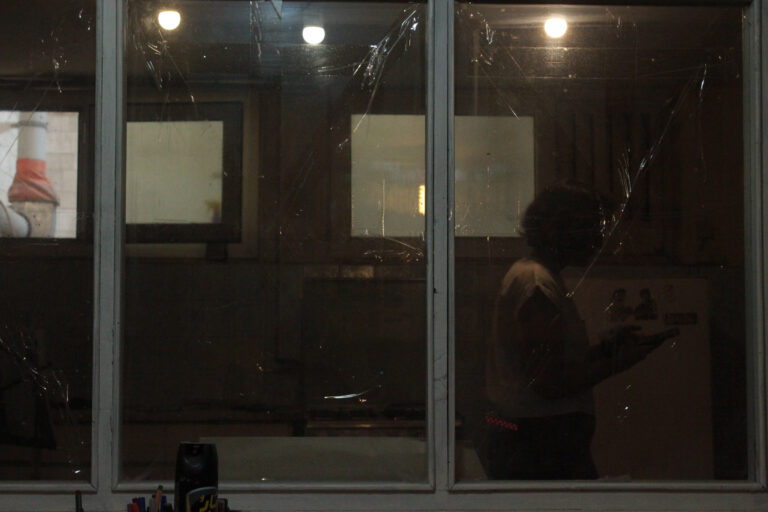
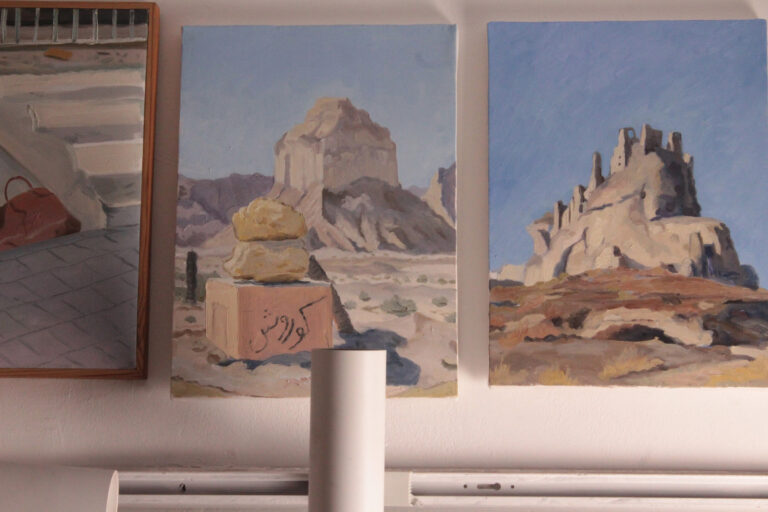
Sometimes, home is what you carry in your suitcase—the things you carefully arrange in the corners of a room in a foreign city, trying to make it your own. Or it might be that same old room in a city that, after all these years, still makes you feel like a stranger.
At others, home becomes all the photos and videos that remain from your family and friends; of the place you lived and the city you left behind; memories of that demolished building and the sense of loss that still falls upon you, despite the passing years.
Home is every sound you carry with you, in the form of a memory: maman’s voice, the sound of laughter and discussion, the music playing inside the elevator, the sound of the boiler room, and the sound of an explosion so strong that everything else is rendered silent.
Home is the building that shelters you when missiles pass overhead; the place you cannot bring yourself to leave, even when you are terrified it might collapse around you. Home is the lump in your throat when you are forced to leave it, even for a short while. It is the familiar smell that greets you when you open the door. The same ordinary, everyday, objects you find yourself staring at when you return.
Sometimes, home is every street of the city. Not only the city in which you live, but every city in your country. Sometimes, every building with smoke rising from it can awaken a sense of home in you, even when you are looking at it from a far away place; from a place you tried with all your might to turn into your home. Home is every image of war you see on the small screen of your phone, images that grow larger and larger in your dreams and dreams that take over your nights. Perhaps home is simply the nightmares and dreams we all share: for those of us who once left our homes as much as for those who stayed.
Home, or Khāneh in Persian, is both the title and theme for this inaugural issue of Fāsh. We laid its first bricks, alongside the establishment of the platform, during the Twelve-Day War, continued working on it as the second war on Iran unfolded, and completed it in its aftermath. However, the desire to create Fāsh had emerged before the war. It grew from our wish to establish a space where we, as a group of artists in the diaspora, could collaborate with colleagues in Iran and share our resources. We decided to bring together artists based in Iran and across the diaspora, and to consider their practices through the lens of preservation and unveiling. What narratives are preserved and made visible through these works and artistic practices that do not fit within dominant histories? This question became our driving force and served as a bridge between the selected artistic works, made both inside and outside Iran.
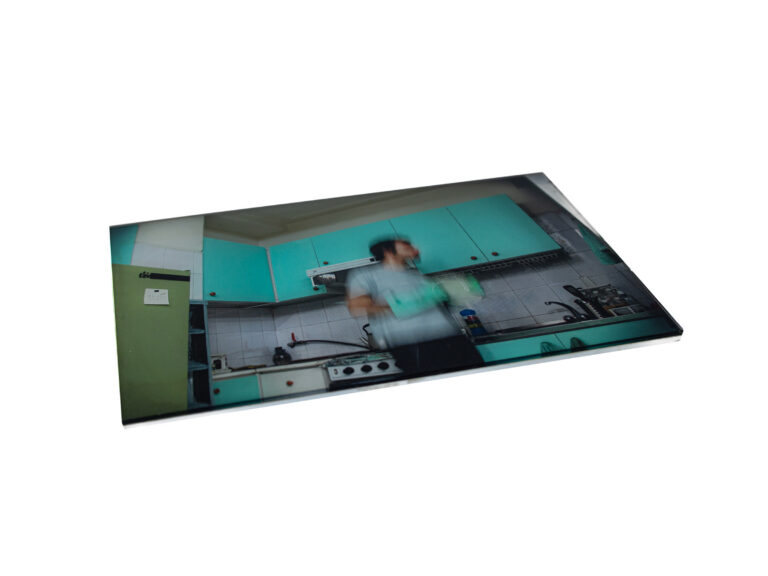
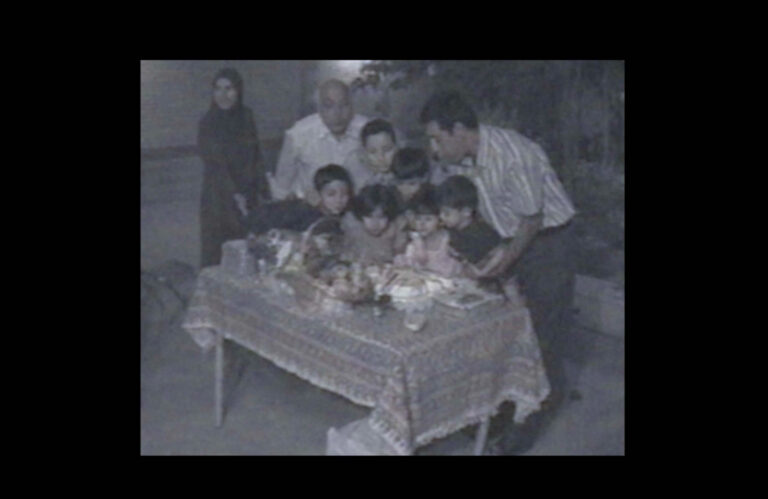
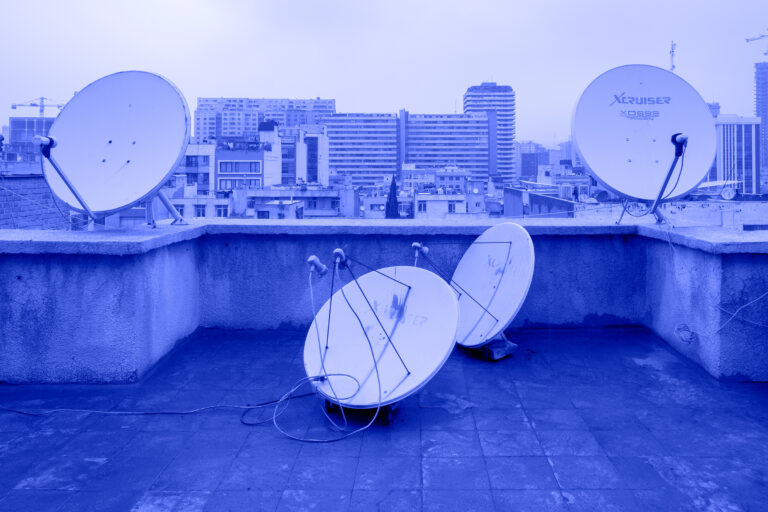
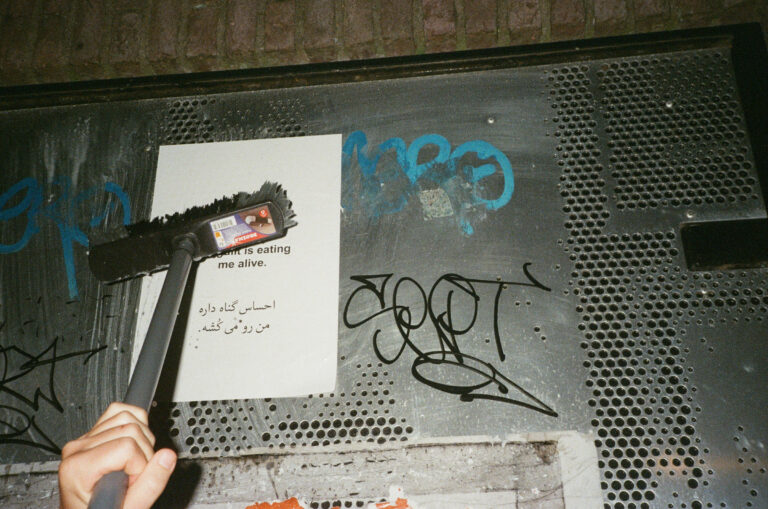
With this question in mind, we selected the first group of artists from among our circle of friends based in the Netherlands and Iran: Golnoosh Heshmati, Leyli Rashidiraouf, Meshkat Talebi, Mohammad Nourani, and Sohrab Kashani. In each of their works selected for this issue, we encountered a struggle and desire to preserve and construct a notion of home. Despite the presence of home common to all, each artist approaches the status of the home, as well as the acts of archiving and unveiling, in a unique way. Talebi’s and Rashidiraouf’s contributions, in particular, were created during the war and navigate the complexities of witnessing the war from the distance imposed by migration. By contrast, Heshmati’s and Kashani’s contributions are derived from broader projects that predate the war itself. That said, both artists create archives of their former homes through photographs, sounds, and everyday objects—archives that seek to preserve the ghosts of those homes and carry them into their new ones. Concluding this issue is a short two-act story by Mohammad Nourani, which revolves around the relationship between objects, people and home, and the act of recalling memories as a way of resisting forgetting during wartime. In the first act, Nourani reflects on his own experience of war with the second act emerging from his intimate conversations with four Tehran-based artists: Nima Fasih, Hanane Jalou, Mahmoud Mokhtari, and Ameen Moazami.
This collection took shape at a time when the relationship between artists in Iran and the notion of home was being transformed by the experience of war. For those of us outside Iran, witnessing the war from afar, the meaning of home was also shifting, though in a different way. We, therefore, sought to address the shifting valences of Khāneh in a series of texts, which were developed in close conversations with the artists and accompany each of the works presented here. At a time when war, migration, and forgetting cause destruction, engaging with the ways in which these artistic practices archive and unveil becomes a way of documenting the shifting meaning of home and preserving the untold stories each home carries.