Kayatoon Barzegar explores how Meshkat Talebi uses her father’s video archive in creating Khesht (“Brick”); an archive that, in this video work, becomes a means for rethinking the concepts of memory, home, and migration.
Talebi created the video work, Khesht, in response to an invitation from Fāsh and alongside the formation of the platform’s first issue, which emerged during the resumption of the US’ war on Iran. The work arrived at its final form through a series of close conversations between Talebi and the Fāsh curatorial team, focusing both on the artist’s research process and on the issue’s emerging thematic focus.
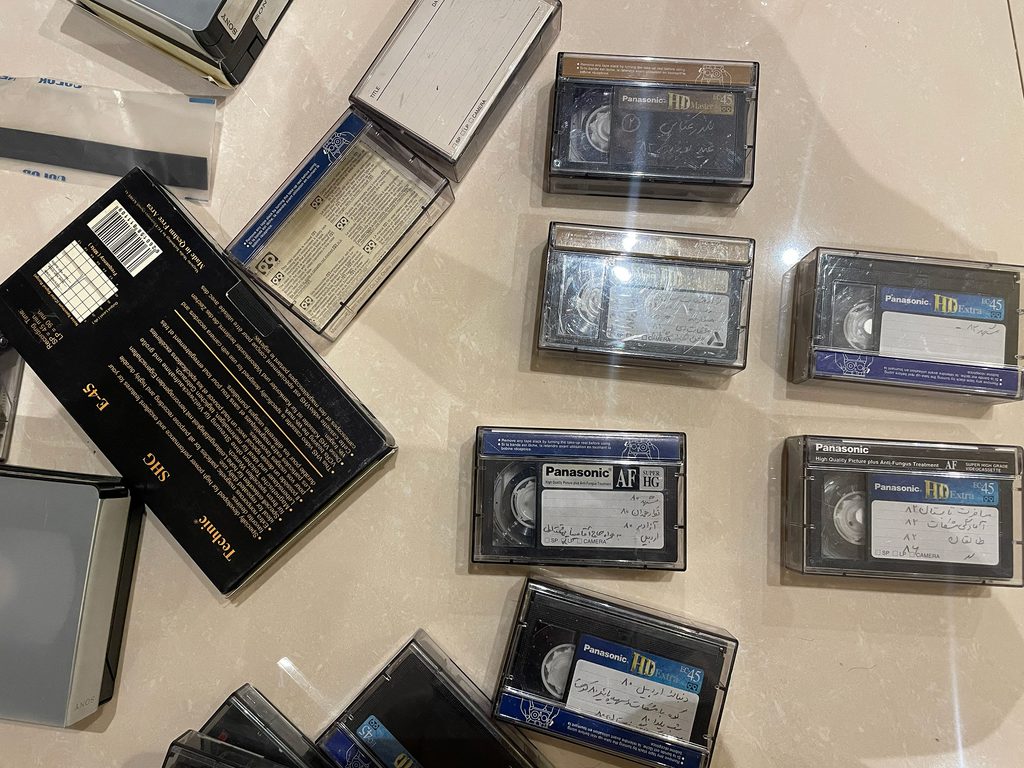
Khesht is part of an ongoing project by Talebi that draws on her family’s archive of video footage, consisting of dozens of VHS tapes, most of which were recorded in the 1990s. Following the artist’s migration to the Netherlands, these tapes became an important source for her artistic practice, in general, and for this project, in particular.
Fāsh’s editorial team commissioned Khesht for this issue, in particular, given its depiction of Talebi’s encounter with her family archive—an archive that, for the artist, functions not simply as a source of images from the past, but as a means of rethinking memory, home, and migration. The short piece that follows takes a closer look at the text and subtext at work throughout Khesht, tracing the ins and outs of the archival processes that shape Talebi’s practice. To this end, and in close collaboration with the artist, we highlighted the formative personal experiences and broader social forces that shaped her engagement with her family archive, as reflected in Khesht—a collaboration through which we simultaneously laid the first bricks, or Khesht, of Fāsh.
It has been a couple of years since Meshkat Talebi, like many of us and our friends/acquaintances who have left their homes and families, migrated to Europe. But, for Talebi, it took some time to truly understand this displacement. For a migrant, the realization that one is no longer there (i.e., home), but lives somewhere else, can dawn on someone long after the actual act of migration itself—and in a single moment. For Talebi, this moment came when, in an old house in the Netherlands, she watched the family videos from her childhood. Footage that her father shot with a Handycam, then edited and preserved with a particular kind of meticulousness and enthusiasm. This collection of VHS tapes has been digitised and is now stored on Talebi’s external hard drive. Most of the footage was shot in Talebi’s family home, which was demolished years ago. Before coming to Europe, Talebi had watched these videos hundreds of times with her family. With the passing of time, they became a source of entertainment. When the family gathered, they would watch the videos and laugh at their hairstyles and fashion choices, or remember those who were no longer among them. No longer there, watching those same images alone and in a new environment evoked, for Talebi, very different sentiments.
Revisiting these memories in an unfamiliar environment, far removed from the people they depict and the places where they are set, intensified her sense of detachment and of finding herself thrown into an unknown place. Talebi, now, viewed these memories from afar. And in a single moment, like a slap in the face, she was struck by a deep awareness of this distance, realizing that she no longer lived in her old home, neighborhood, or city, and might never return there except for short, intermittent, visits. In fact, it was only when, alone in an old house in the Netherlands, Talebi watched the family videos that she truly, for the first time, felt that she was no longer “there.” These old Dutch houses are more than 100 years old. They’re not slated for demolition, but preserved. The contrast between her demolished childhood home, whose traces remained only in family archives, and the Dutch house that Talebi now had to accept as her new home transformed her relationship to her family archive. It was in this eerie moment that she began working with the digitized family videos she had inherited from her father.
In this new geographical location, Talebi’s memories underwent changes that altered her sensory perception of the past. After migrating, she noticed details in the old footage that she had not noticed during previous viewings. She noticed her constant presence in front of the camera, in contrast to her older sister’s absence—sometimes by their father’s choice, at others, at his insistence. This is the subject of another of Talebi’s video works, ‘The Camera Cuts Through My Fantasies Like a Knife Blade,’ which was made using the same family archive. For Talebi, all these details carried such profound meaning and emotional weight that she began rearranging an archive that, until then, had been nothing more than a repository of family memories. But now, due to the distance created by migration, she transformed this family archive into raw material for an artistic project. In this archive, Talebi seeks something new, something beyond nostalgia or the painful confrontations that accompany the experience of migration. She seeks to uncover new layers of meaning that she only now discovered, in an attempt to forge a connection between here and there.
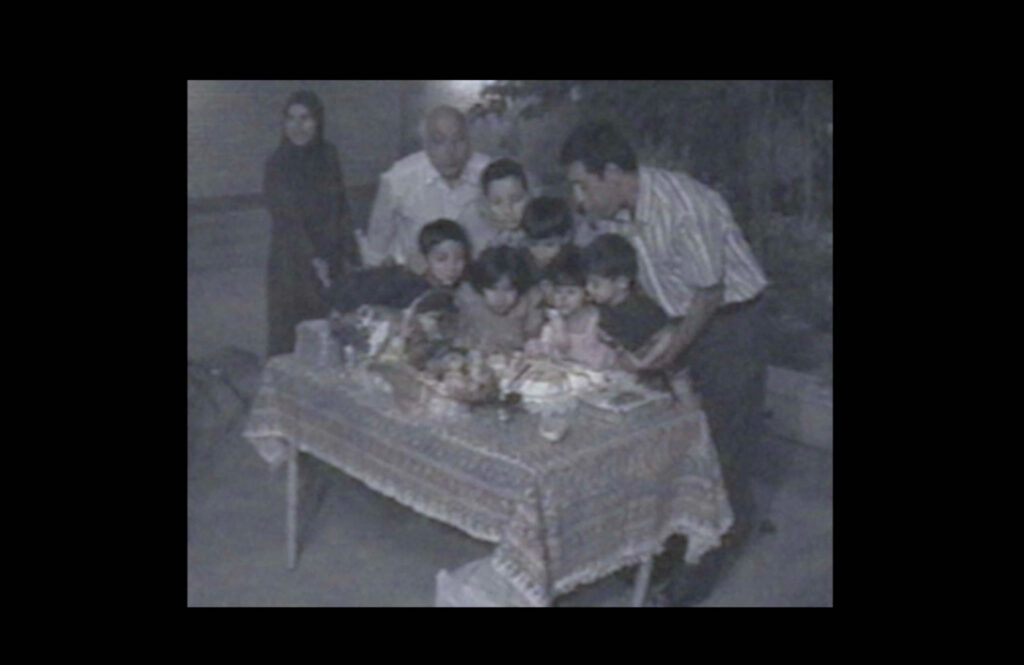
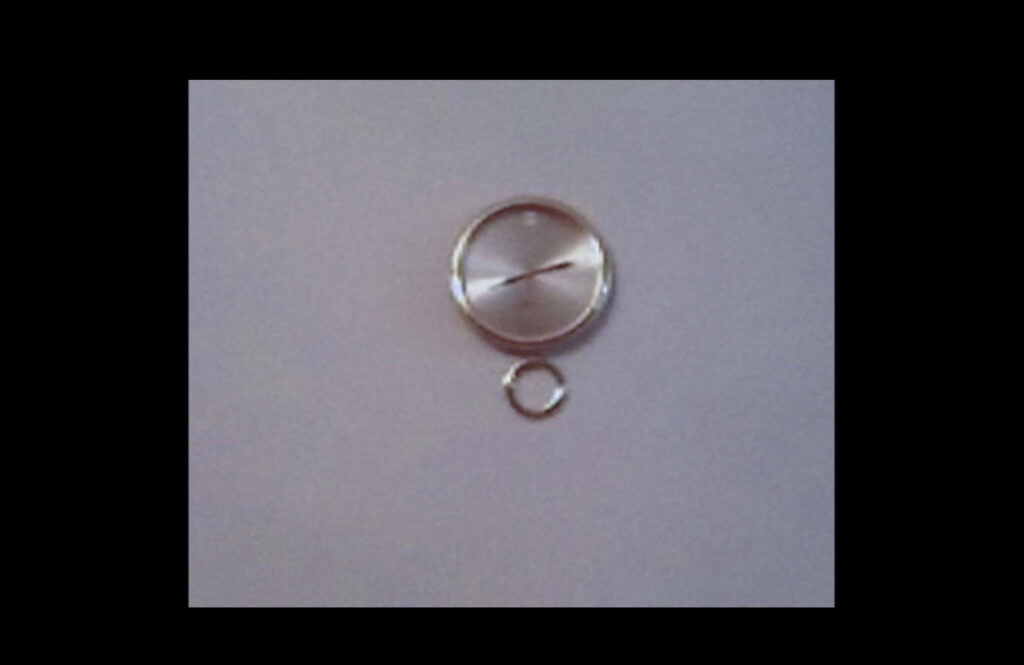
Talebi was born in a two-story house in the western suburbs of Tehran, where she spent her childhood years. Her father’s side of the family lived on different levels of this small apartment building. In the building’s shared garden, Talebi’s family would gather for every occasion and frequently host guests. Born towards the end of the 1990s, Talebi became familiar with her father’s camera and his obsession with documenting their everyday lives from an early age. Her childhood unfolded during a period when Iran’s middle class could afford small handheld camcorders and began using them to document their memories. It was during this period that her father, like many others, caught the “camera fever” and ended up shooting countless videos documenting their lives which mostly took place inside the building and in its garden: shots that, at times, capture familiar gatherings on different occasions and, at others, seemingly unimportant details of their home, such as the clock on the wall or a framed Quranic inscription. The camera lens lingering on these everyday objects lends theses scenes that particular quality of still lifes. Still frames, interspersed with chaotic scenes of busy family gatherings, give the audience a chance to pause and take a breath. The objects and details documented in these videos are familiar to audiences who experienced that period in Iran. Not only the household objects, but also the clothes, hairstyles, gatherings, table settings, food, dishes, and even the distinctive visual quality of handycam footage and the editing techniques of the time—where one scene is juxtaposed with another in the most peculiar ways—are all familiar.
When Talebi was about ten years old the house she was raised in was demolished. Just like most houses in Tehran and other large Iranian cities, their demolition distorted the memories of many Iranians. From the early 2000s onward, the apartment construction boom, accompanied by the growing dominance of a culture centered on apartment-living, accelerated at an unprecedented pace and intensity. As a result, many traditional houses and smaller apartment buildings were demolished, rapidly replaced by multi-story apartment buildings that sprang up like mushrooms. Administrative policies such as selling development density, together with rising demand driven by increasing migration to major cities and other factors, such as growing oil revenues, all combined to fundamentally transform the face of the city. Cities’ historic fabric suffered severe damage and, in many cases, was completely destroyed. Today, few physical traces remain from the childhood homes of this younger generation of Iranians. And the few traces of those houses that remain can now be found only in photo albums and old videos; and even then, only if there happened to be someone like Talebi’s father in the family, with the patience to record and preserve them.
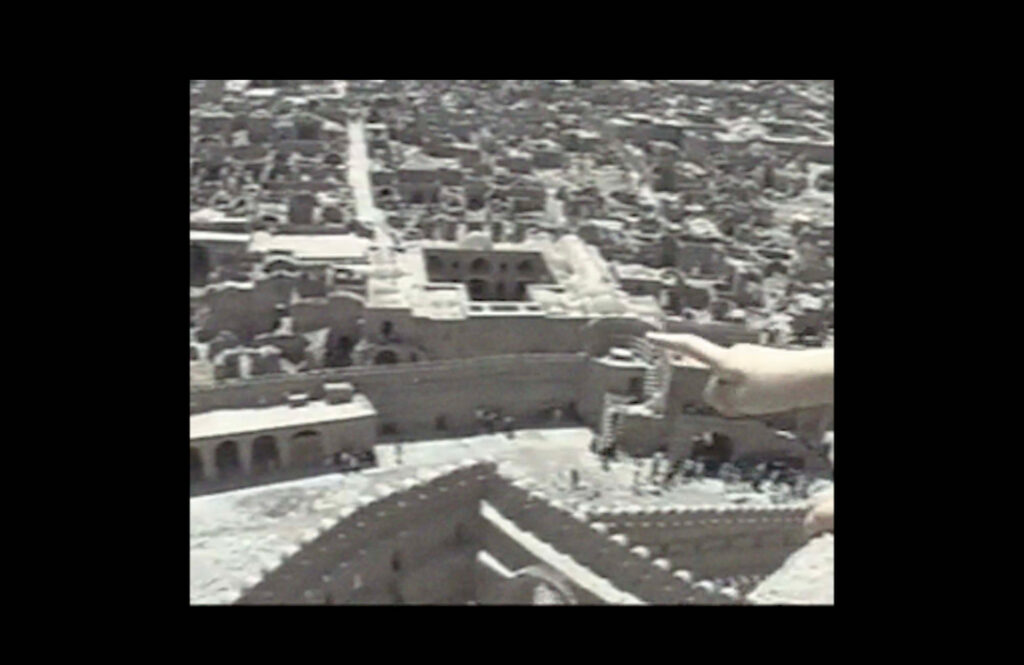
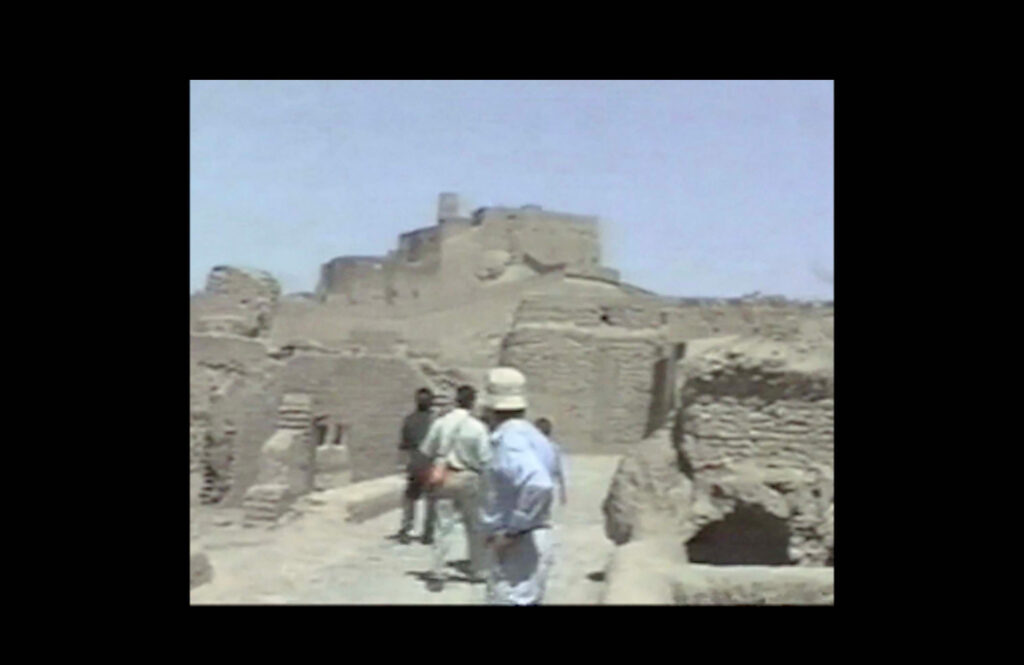
But not all of Talebi’s father’s footage was recorded in their now demolished house. Family vacations are another category of the family’s archived footage. Included among these is their journey to Bam, in the southeastern province of Kerman, which left the strongest impression on Talebi. Bam is one of Iran’s historic cities and has been included in the UNESCO World Heritage List for its unique urban landscape, its use of local materials and techniques, and its historical commercial significance. The formation of Bam’s urban fabric dates back to the Achaemenid period, between the sixth- to fourth-centuries BCE. The city’s most famous historical monument, the Arg-e Bam, is a striking example of a fortified city enclosed within a citadel, still standing strong despite having endured repeated attacks over thousands of years. In 2003, Talebi’s family traveled to Bam during the Nowruz holidays. It would be the last Nowruz for many of the city’s residents. Several months later, a devastating earthquake engulfed the entire city in destruction, becoming one of the deadliest earthquakes in modern history.
In Talebi’s Khesht, different kinds of archival footage were selected and woven together in short fragments, resembling the way old memories resurface in the mind. With a static shot of Talebi’s wall clock in Rotterdam, accompanied by the sound of its ticking, recurring throughout the video and connecting the various categories to one another, Khesht can be divided into three main visual categories. The first category consists of videos depicting Talebi’s family home and its inhabitants, while the second comprises footage from her family’s trip to Bam—both sets of images are drawn from Talebi’s family’s Hi8 camcorder archive. The third visual category consists of documentary footage of the Bam earthquake, which Talebi found online and combined with the two former categories of archival material. The images have been edited in such a way that it sometimes becomes impossible for the viewer to distinguish which shots of Bam come from Talebi’s family archive, and which are drawn from archival footage found online. This juxtaposition raises questions in the minds of the audience: Was the artist’s house in that earthquake-stricken city? What might explain the juxtaposition of these images?
Talebi’s family archive includes footage from many vacations, but their trip to Bam remained more deeply embedded in the family’s memory than the others. Talebi remembers how her family members were shocked by the images of Bam on the news. “If we had made the trip a couple of months later, we might have been dead too,” they told each other. They meticulously followed the televised images, hoping to recognize the places they had visited. This sudden proximity to death, and the destruction of everyday life, cast Talebi’s memory of their trip to Bam in a different light. Perhaps what made this trip, and the earthquake that followed, stay with Talebi was precisely this experience of fearing destruction—the fear that her home and family could have been among those whose houses were completely destroyed, with most of their residents no longer alive.
Moreover, another reason informing Talebi’s choice of Bam as the subject of Khesht was the experience of war following the US-Israeli bombardments and attacks on Iran in 2025 and 2026—a period during which we began creating this issue, the first issue of Fāsh, and in which the fear of our homes being destroyed had taken over our entire existence. The focus on home as the main theme for this issue, combined with the chaotic and stressful experience of war and our observation of our homes from afar, both willingly and unwillingly, resulted in Khesht, and Talebi’s own, engagement with the question of destruction. After experiencing these emotionally charged times in a place far from where she was born, home no longer refers to her family home. All the cities, and even her entire country cognitively overlap to become her home—a place where her mother tongue is spoken and whose social relations she knows intimately. Bam and Talebi’s family home share much in common, and precisely at a moment when the meaning of home—both physically and psychologically—is undergoing destruction and transformation.
Destruction takes many forms. Sometimes it is fast—happening in a single second, right before your eyes. At other times, it is a slow and gradual process that can only be felt, like memories that slowly disappear or fade. The process of destruction that took place in Talebi’s mind, like the memories of many migrants, was shaped by multiple forces. Since, in addition to the element of time, place also subjects memory to change. Being away from the spaces we once inhabited changes our memories of them. You no longer walk down that familiar street; you are no longer in the room where you lived for years, and you no longer see even the people who remind you of your past. Hence, the rupture that characterizes the memories and recollections of the migrant, directly affecting their lived experience. That is why, with migration, you are overcome by a fear of forgetting the past—and, in turn, of a past that forgets you. A fear that itself becomes an invitation to confront a form of destruction.
And yet, on closer examination, the roots of this fear and destruction can be traced to a time that precedes migration itself. From the very moment you decide and know that you are planning to leave, a rupture begins to take place. For Talebi, the destruction of her home happened once in a physical sense, when her childhood home was demolished to make way for a taller apartment building. But the destruction of home occurred on a deeper level when she realized that, against her wishes and in pursuit of better circumstances, she would choose to leave it. And today, with the onset of war, witnessing the different layers of the destruction of home has reached its most intense form. The dust that had gradually settled over different layers of her memory, and which she had brushed away by watching the archives, now, as she watches images of the war from afar, falls upon her like a heap of rubble. Perhaps this is why, these days, Meshkat Talebi keeps returning to what her father recorded all those years ago, as though it were a lost ghost calling her back.