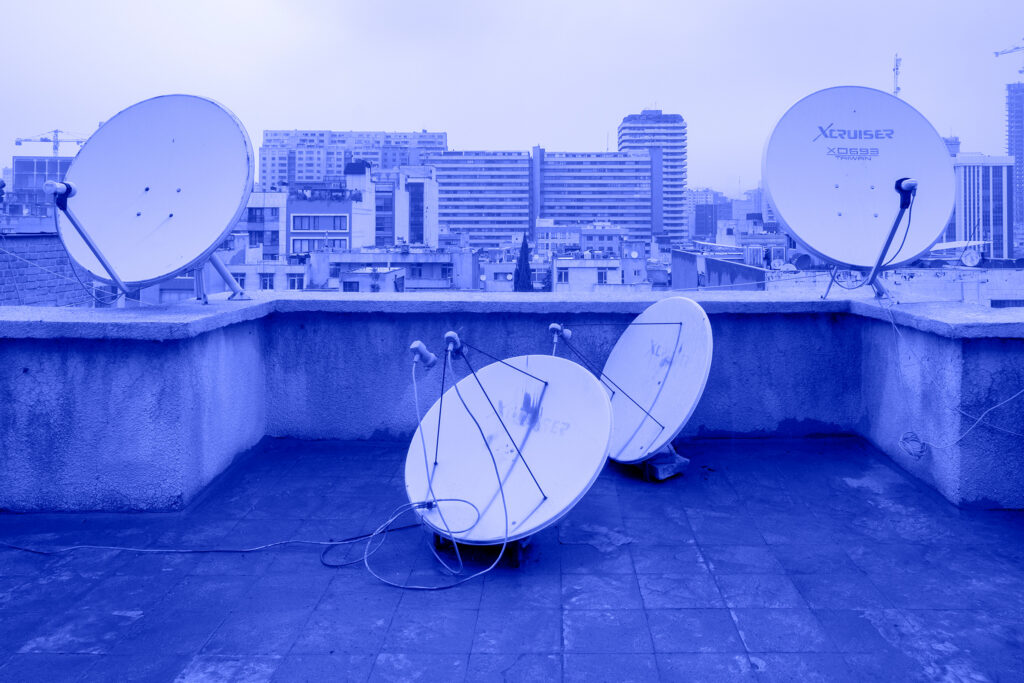
Niloufar Nematollahi engages with Golnoosh Heshmati’s family archive, tracing unfulfilled promises of modernity and broken hopes that haunt the Tehran apartment building where the artist was born and raised.
What Is Left to Listen to Now? is a sound installation and performance conceived by Golnoosh Heshmati in 2025 alongside a publication titled The Whirring in My Bones. In What Is Left to Listen to Now? Heshmati listens for, and recreates, the echoes of collective promises and failures that continue to reverberate through a Tehran apartment building completed in 1974. Bringing together fragmented family stories, observations, staged artistic experiments, and theoretical reflections, The Whirring in My Bones develops listening as a method of entering into a dialogue with that same building.
The backbone of both pieces is Heshmati’s family archive of the apartment building in Tehran where she was born and lived until moving to the Netherlands in 2023. Heshmati’s archive is exceptional. This building, constructed at the height of urban development in the 1970s, has been preserved by its residents, unlike many buildings from the same period that have been demolished or are at risk of being destroyed. Moreover, among the buildings that survived since the 1970s, few are accompanied by archives as extensive and as carefully maintained as Heshmati’s, if they have been documented at all.
The Fāsh curatorial team initially invited Heshmati to share this remarkable work as it reveals the inner workings of an artistic practice that is, at its core, archival. The approach embedded in this archive beautifully aligns with Fāsh’s broader aim of foregrounding processes that approach art not only as a means of preservation but as a reflective tool on the nature of preservation. At the same time, Heshmati’s work challenges the authority of official archives and the historical narratives they produce. Neither Heshmati’s artistic practice nor her family archive aspire to tell History with a capital H. Instead, both remain almost religiously devoted to a single, seemingly ordinary fragmented history: an apartment building in Tehran, commissioned by the artist’s grandparents, which has been home to generations of the artist’s family.
When Heshmati shared her archive with us in 2026, Iran was in the midst of war. As we gathered around the family photographs and archival documents spread across her kitchen table in Rotterdam and listened to the uncanny recordings she had made during her last visit, none of us dared to voice the question drifting through our minds: what if this building is reduced to rubble while we are here?
Yet the threat to the building did not begin with the war. Long before war made its destruction imaginable, Heshmati had already experienced another, slower form of loss. It began before her migration but deepened when she finally left, leaving both the building and Iran behind. Perhaps it was first the anticipation of distance and later distance itself, which compelled her to turn to the archive to create What Is Left to Listen to Now? and The Whirring In My Bones. Yet it is under the looming threat of war that the preservation of this home through artistic mediation acquires an even greater urgency.
What captured our attention when Heshmati presented her archive were the stories she shared alongside each piece. The story of a family that experienced social mobility during the oil-boom years, followed by the 1979 Revolution, then eight years of war (Iran-Iraq War), the neoliberalisation of the post-war era, and the shifting governments and the repressed social movements that followed. Within the documents that bear witness to the many transformations this building has undergone, we could hear the ghosts of history: ghosts born from unrealised promises of modernity, comfort, and togetherness haunting not only this building but also the city—and perhaps even the country—in which it stands.
We were compelled to find a way not only to preserve and make public a selection of the archival documents gathered by Heshmati and her family over the past 50 years, but also to preserve and share the stories attached to them. The following short story, told from the perspective of a character whose return to the building after years of migration prompts her to uncover the memories and archives embedded within the building, functions as a literary compliment to both the selection of Heshmati’s works presented here and our conversations with the artist in the lead up to publication. Moving from the building’s heart—the heating system in the basement—to its highest point—the roof—the narrative unfolds across four key locations, weaving together Heshmati’s family stories, drawn from The Whirring in My Bones and our conversations, with stories from my own family.
The Basement
The droplet’s separation from the ceiling is a painfully slow process: liquid struggling to free itself from the concrete. But once the first drop succeeds in surrendering itself to gravity, the next ones follow rapidly. Our ceilings often leak. Like a distant relative whose perfume reaches the room while they are still parking the car, the leak first announces its arrival through a penetrating smell. Dampness. A smell that soon spreads throughout the apartment, sucking out all its air. It begs for intervention, but there is little you can do to stop the monster growing between the walls, waiting to burst somewhere no one can yet pinpoint—until a drop falls in the Kashan carpet’s medallion.
Should I say something to my mom? Should I call Mr. Ebrahimi, or was his name Mr. Rezai? Should I just accept that this building will never be fixed and leave? To another building, another city, or perhaps even another country not haunted by ghosts of unfulfilled promises. Promises of modernity, comfort, and joy, of which today only dusty pipes and empty apartments remain. Can I trade this place for one with fewer ghosts—or at least with unfamiliar ones that might not want to haunt me?
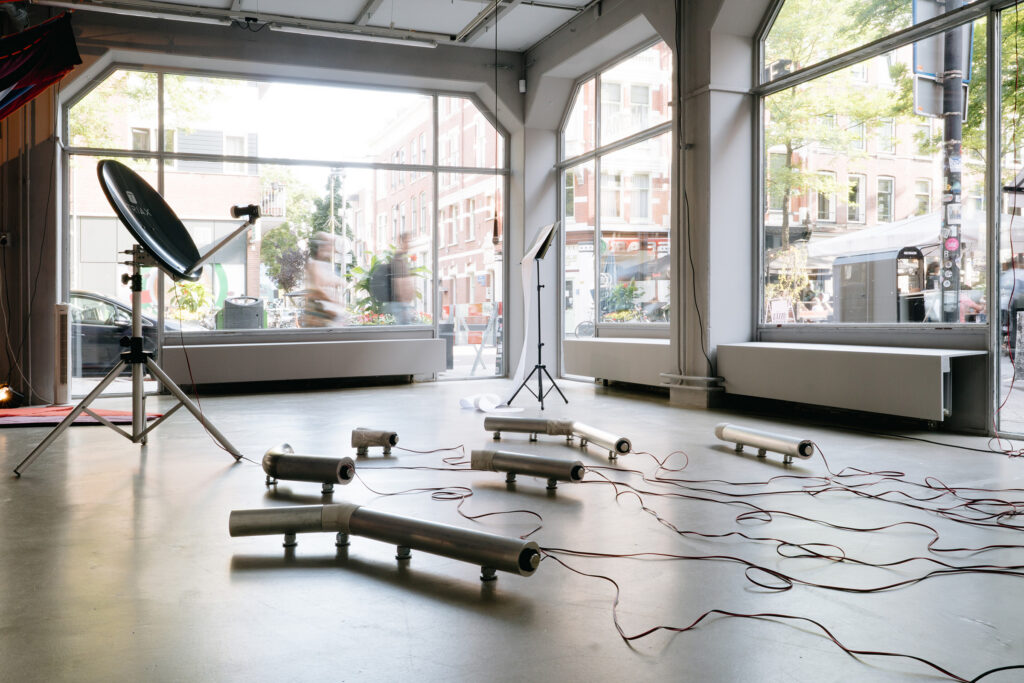
Golnoosh Heshmati, Heating Instrument, 2025. For a better experience, listen with headphones.
The heating system next door disrupts my thoughts. The sound of a colony of giant bees. Its constant hum makes the puddle on the carpet tremble. I redirect my gaze: a full set of Chinese porcelain; a crystal vase holding three plastic lilies; an inlaid box filled with glittering cutlery; a silver mirror and matching candleholders, with an ashtray hidden behind them; a red radio-cassette player. Everything trembles, ever so slightly.
All of this belonged to Aunt Mehri. From kindergarten until high school, I spent every single day after school with her in this apartment. I would ring the bell and wait for her to buzz me in. But once I reached her apartment door, I paused before ringing. I wanted to make sure she had enough time to put her cigarette and lighter away in a velvet-red box, hide it on top of the kitchen vitrine, and mask its smell with a jasmine perfume.
As I waited for the right moment, I grappled with my ever-growing fear of the noisy bees inhabiting the room next door. I had caught their glimpses from behind Mehri’s thin legs whenever she entered the room because something was wrong with the heating. She would curse her way through the maze of pipes, like a basket of iron snakes that sounded like human-sized bees. After decades of coexistence, Mehri had become deaf to them.
After what felt like a lifetime, I would press the bell. Mehri greeted me with the smell of smoke and jasmine, intermingled with that of khoresht-e karafs and rice. Sometimes, when she retreated to her room for an afternoon nap, or in those brief moments of contemplation before laying down a playing card, I would look around the room. Not a single speck of dust, as if all of her belongings were purchased that very day.
Now that Aunt Mehri had passed away, a layer of dust rested on all of her belongings. The silence before one of us laid down a card had stretched across my entire visit. I was left alone with the monsters that lay at the building’s heart. Without Mehri’s presence, I felt the trembling of the plastic flowers, the china, the vases, the silverware, and the radio more intensely than ever before.
I dusted them. I mopped the puddle, placed a bucket beneath the leak, and locked the door behind me.
The Elevator
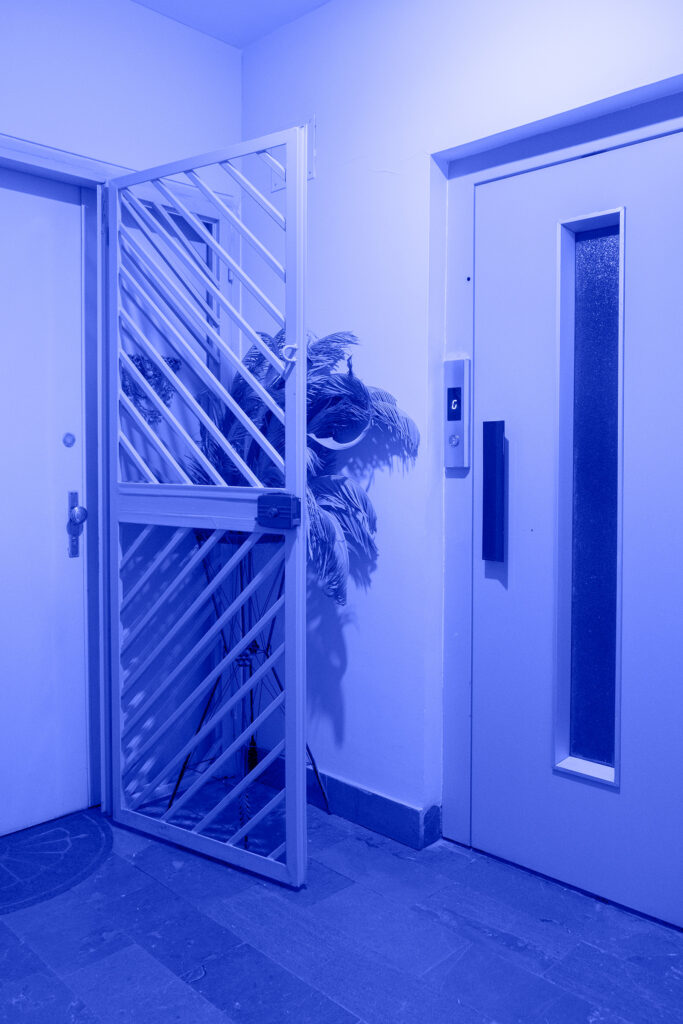
“Welcome to the basement,” the artificially soothing female voice announces just before the cabin hits the bottom with a bounce. I pull the elevator’s ill-fitting door shut behind me, muting the hum of the heating system under the melody piping through the elevator speakers—a karaoke version of a George Michael song I cannot place.
Golnoosh Heshmati, The Elevator, 2024. For a better experience, listen with headphones.
Upon the building’s construction, the elevator was its crown jewel. Swiss-made, German-exported, the Schindler elevator was my grandmother’s most expensive recommendation while serving as an assistant to the building’s architect. In the years that followed, she took it upon herself to oversee the elevator’s upkeep, arranging repairs, oiling its mechanisms, and making sure it remained free of even a single speck of dust.
Not long after the building’s inauguration, the post-revolutionary regime halted the import of many Western products. Eight years of war and international sanctions only deepened the shortages. My grandmother had walked from one shop to the next, visiting every supplier in Tehran in search of Schindler-compatible replacement parts. Eventually, she accepted what every shopkeeper had been telling her all along: “It doesn’t exist on the market anymore.” Like everything else, her most beloved possession had to change. One by one, she replaced its original parts with Iranian-made alternatives. Over the years, the Schindler elevator became a patchwork of mismatched pieces all struggling to work together.
After I got stuck in the elevator as a child, my grandmother finally decided to pull the trigger and replace what remained of her butchered Schindler elevator. Neither we, nor our neighbors, could afford to splurge on cutting-edge technology anymore, so we settled for a Chinese alternative. The simple aluminum ceiling was replaced by a mirrored one studded with tiny diamond-like lights. The rich green walls gave way to gold and silver panels that seemed eager to rust, and the elevator’s silence was replaced by an endless George Michael loop. The diamond lights and gold-and-silver walls tried desperately to restore a sense of luxury, but they failed miserably.
I look at myself in the mirror, searching for my eyes behind the diamond-like lights, and think of all the times I have looked into them from this exact spot: the day I got stuck in the elevator; the day I came home after my university entrance exam; all the days I went to university, and the countless times I came home after gatherings; the first time I left for the airport, and the first time I came back home; and all the trips down to Mehri’s apartment and back up to ours.
The elevator bounces once again. “Welcome to the sixth floor.”
The Apartment
Television sounds greet me from behind the door.
– Turn it off, Baba. Why does this thing have to be on from the moment we open our eyes until we close them?
– And hello to you too. My day was great, thank you very much. How was yours?
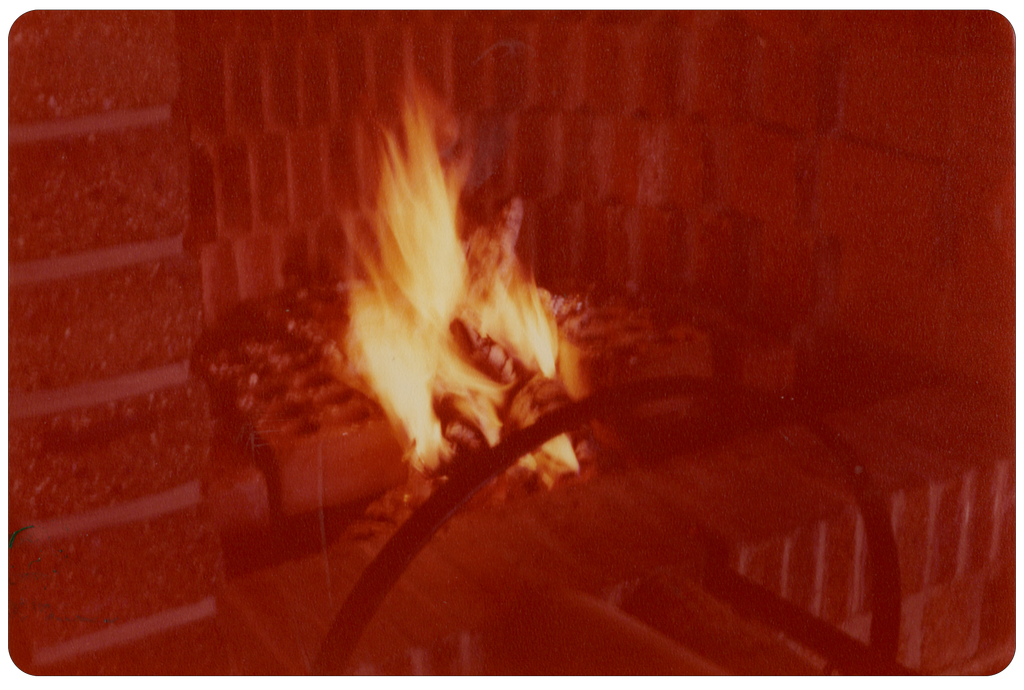
I pass through the living room toward the kitchen, trying to catch some warmth from the fireplace, the television’s voice following me into the kitchen. “Ignore him, azizam. Come here,” says Maman, “I found that folder case you’ve been asking for,” while turning her gaze toward a rusty box sitting in the middle of the green kitchen table. “These are all the documents concerning the building’s construction that your father and I kept,” she says, pouring two glasses of dark black tea for us.
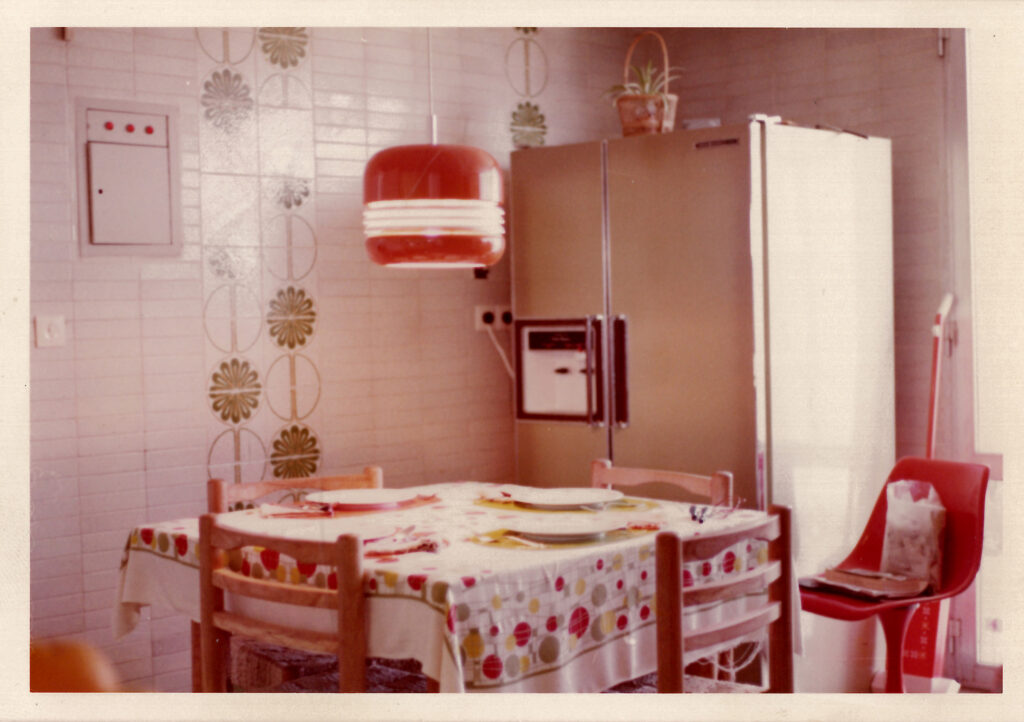
Rarely did anyone archive as religiously as our family: every single stone moved since 1970 to make way for the building, every brick brought to the site, and even every rial earned or borrowed to be spent on its construction had its own record. All of it was gathered inside this iron folder case, which was now bursting at the seams.
Maman takes a sip of her tea. Relying on the theanine for energy, she begins rifling through the documents. The documents’ letterheads change with the passing of revolutions and the governments that come and go: lions and suns had given way to Allahs and tulips, while my family continued to archive.
They spent the late 1960s and early 1970s moving from one city to another. There was no profession my grandfather did not try. They moved from Tehran to the south, then to Esfahan and Shiraz, spent some time in the north, and eventually returned to Tehran again. At first, they lived in a traditional one-story building in the city center: a courtyard surrounded by rooms. But when my grandmother heard from a colleague that it was possible to gather investors and build an apartment block, she got to work.
Tehran was changing rapidly, and she did not want to be left behind. Foreign architects were brought in to design apartment blocks capable of housing hundreds of families, but they were not given the time to learn the Iranian ways of living that should have informed their designs. The city had to become modern as quickly as possible.
Contrary to those in charge, Modernity was not grandmother’s priority. She and her husband had only one goal in mind: building a house big enough to keep them and their children together.
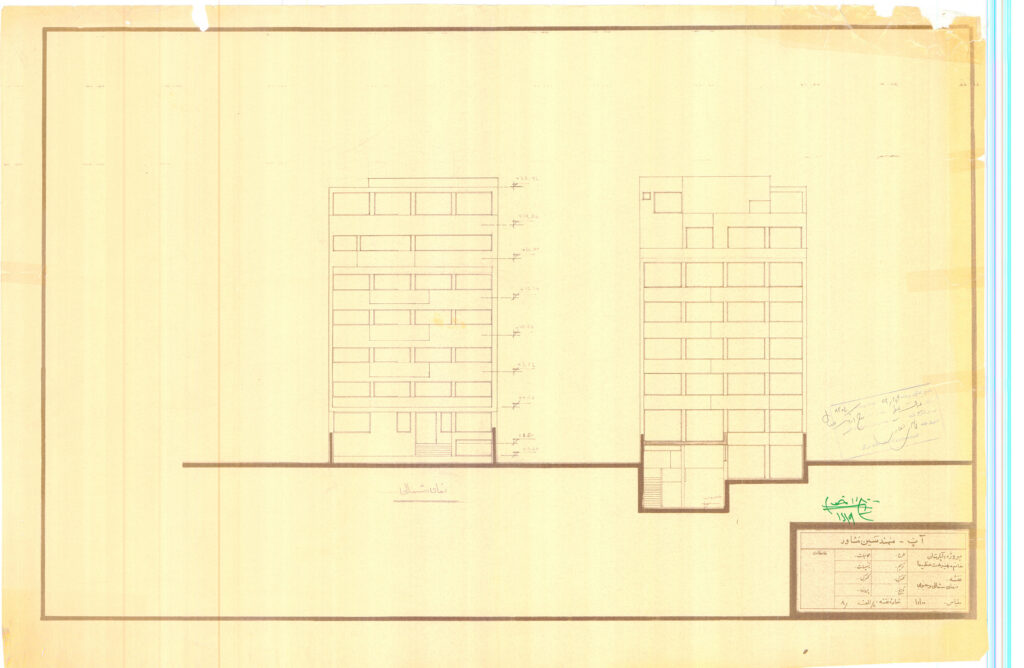
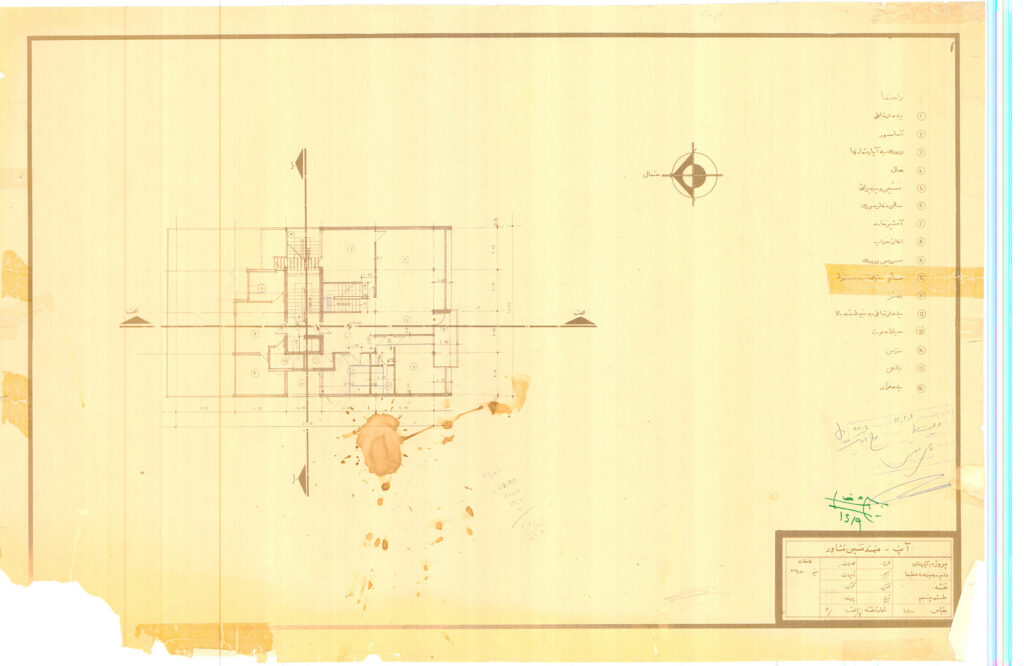
My mother is the only child who ended up living here. She flips through the archive. “These are the floor plans,” she says, laying the paper, turned yellow with age, open on the kitchen table, revealing a coffee stain. She studies the floor plan in silence, sipping her tea in admiration. Perhaps this is the admiration she first felt when she stood in front of the apartment block for the first time.
– And what is this?
– It’s a page from a draft of a book by Marie Curie that your grandfather translated. Look at his handwritten edits.
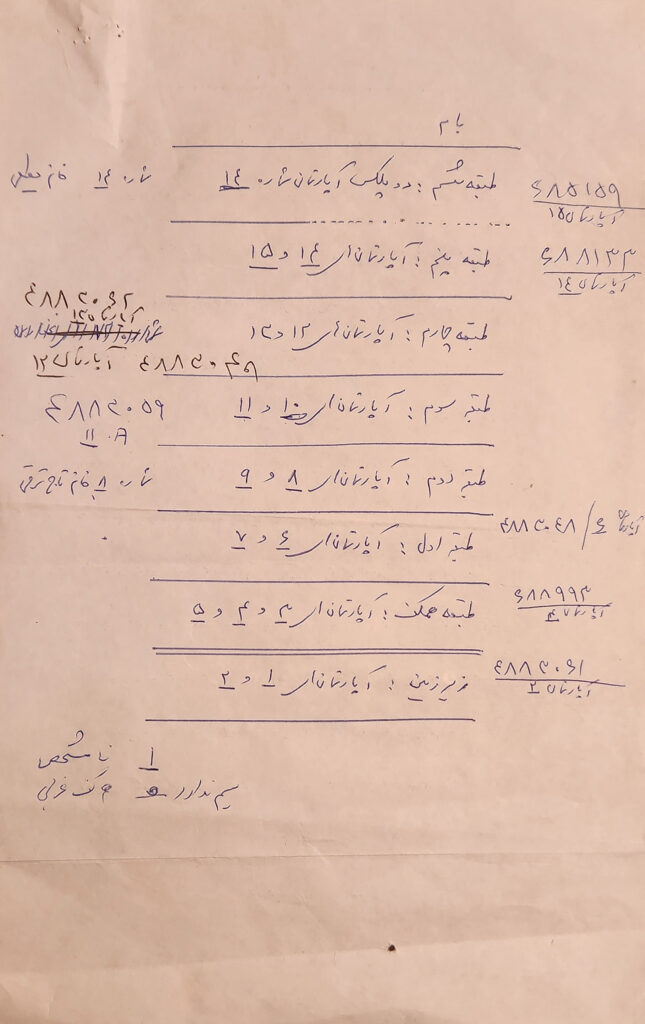
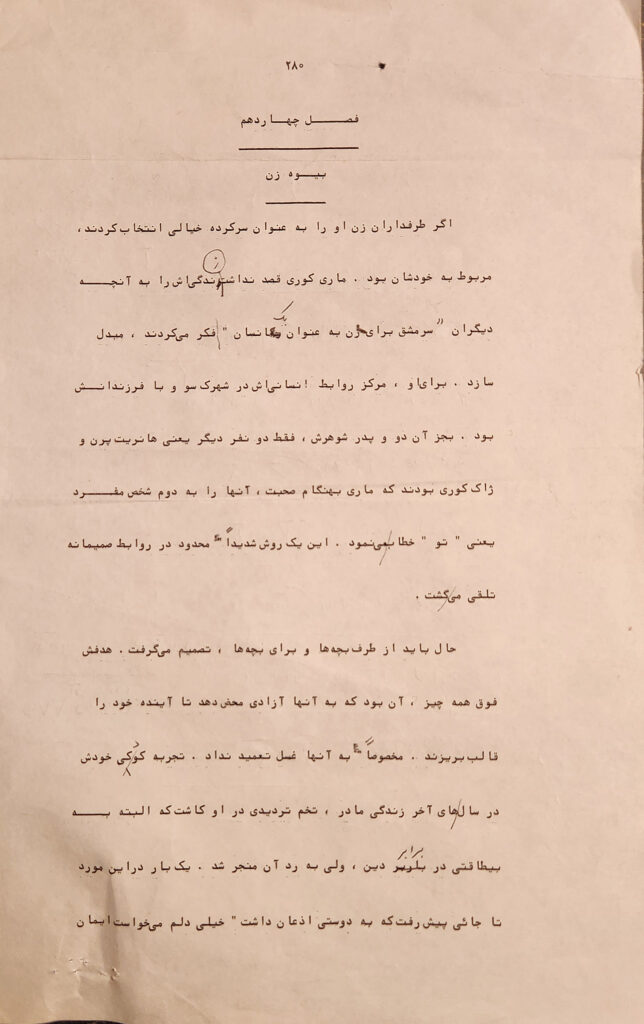
Pages from a Living Archive, Two-sided notes: left pages contain notes on the building; right pages show a draft related to the Marie Curie book. Late 80s.
When her fingers become overwhelmed from tracing her father’s handwriting, she flips the page, revealing a list. “He must have recycled his translation drafts into records documenting information about phone lines and gas,” she says. The television broadcast abruptly cuts off, leaving a minute of complete silence. “God loves you,” Maman says, peeking from behind her cup of tea. “I’m going to the rooftop to see what’s wrong with this thing,” yells Baba from the living room.
The Rooftop
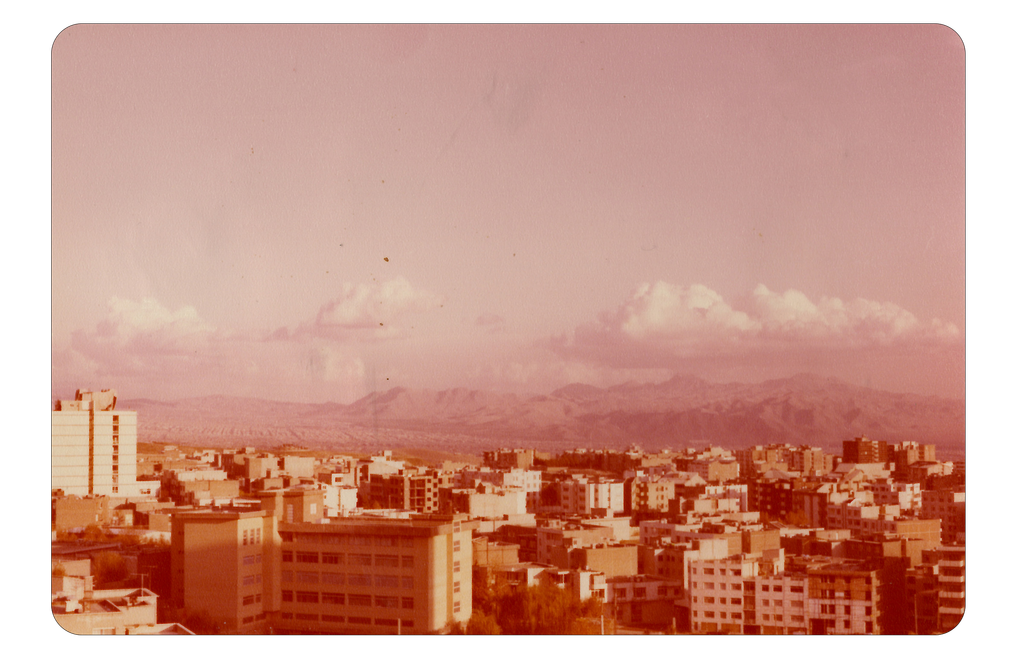
On the rooftop, you have to imagine the Alborz mountain range behind a wall of air pollution. I remind myself that it’s still there. It has always been there, and it always will be.
“Azizam, pass me the pliers.”
Baba’s voice comes from behind the satellite dish.
The satellite dish has stayed in exactly the same spot where it was first installed for so long that it seems to have fused with the rooftop itself. By now, it is as steadfast as the Alborz mountain range. It was 1993 when my uncle installed it. Like my father, my uncle was obsessed with television. Unlike his brother, however, he did everything with extraordinary meticulousness.
Before he emigrated, my uncle worked for Iran’s national radio and television broadcaster. For two full decades, he had been devoted to the Revolution; he saw his work as a debt he owed to it and carried it out with the utmost care. But the longer the war dragged on, the more disillusioned he became with the television programs he produced. All that blood. All those deaths. Even after the war ended, it seemed that the only thing television was still allowed to show was blood and death.
Desperate to escape this reality, he finally found an opening. One sunny winter afternoon, in a teahouse tucked away in one of Naser Khosrow’s alleys, he met a friend who was willing to risk smuggling a satellite dish across the border. After months of planning and waiting, one day his friend finally rang the doorbell. After recounting the heroic story of hiding the dish inside a sheepskin to get it across the border, they went up to the rooftop and installed it.
After moving away, the only thing my uncle left behind was this satellite dish. A dish like a monument, still standing exactly where he had left it all those years ago. Having settled in Germany, my uncle would call us at precisely the same time—at noon—every day to ask how the building was doing. With the same meticulousness as always, he would ask about the pipes, growing more decrepit by the day; the noisy central heating system; the crumbling elevator; and the constantly changing neighbors.
He never said he missed us. He never said he missed the endless conversations around the kitchen table, Mehri joon’s celery stew, watching the news in silence with Baba, or their shouting at the television during football matches. He never said he even missed the sound of the elevator or the heating system. He talked about the building because talking about anything else was too painful—not just for him, but for all of us. Talking about the building meant clinging to my grandparents’ dream: the dream that one day these walls would bring all of us back together, even though my grandparents themselves were no longer there.
Dad pokes his head out from beside the dish and says:
“I think it’s working now. Go downstairs, azizam. If it still doesn’t work, call me.”